How to Win With AI in 2026
Most businesses still use AI like a smarter search bar. They prompt, copy, paste, and call it innovation.
That is not the game anymore.
The companies pulling away in 2026 are not "using AI tools." They are rebuilding their operating system around AI. Different architecture, different execution speed, different economics.
TL;DR: Stop treating AI as a helper and start treating it as infrastructure. The practical path is 3 layers: (1) replace repeatable low-leverage tasks, (2) build an AI-powered output engine, and (3) use AI to run workflows that were previously impossible at your current team size. Do this on top of a process that already works, with clean data and hard ROI tracking.
Core Bet for 2026: The edge is not better prompting. The edge is faster system-level execution loops.
AI Native vs. AI Assisted
Most teams today are AI assisted. They use ChatGPT for writing, summaries, and quick research.
Useful? Yes. Strategic edge? Almost none.
If everyone in your market is doing the same prompts in the same tools, there is no defensible advantage. You are just executing the old model with a slightly faster keyboard.
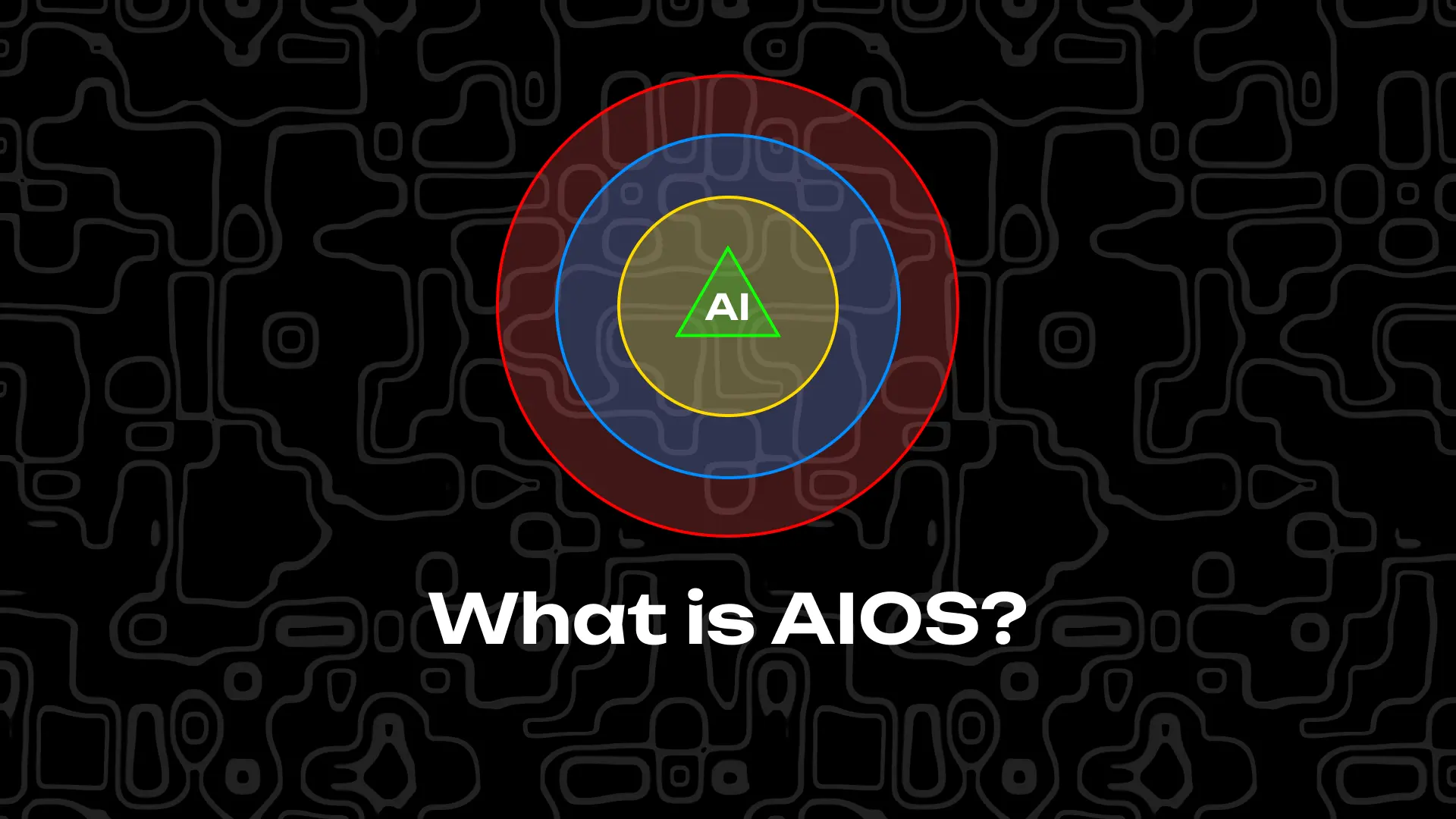
AI native means AI sits inside how work gets done, not on top of it.
- Workflows are designed AI-first, not "human-first + AI bolt-on"
- Output systems run continuously, not only when someone remembers to prompt
- Humans focus on judgment, strategy, and taste; AI handles repeatable execution
Litmus Test: If your workflow breaks when no one is manually prompting, you are still AI-assisted, not AI-native.
Layer 1: Replace Low-Leverage Repetitive Work
This is where almost everyone gets stuck because they automate a few tasks and move on too early.
The goal is not "speed up tasks by 20%." The goal is to remove repeatable low-leverage tasks from human workload entirely.
Step 1: Audit Operations
List every task your team does more than once per week.
Then tag anything that follows a repeatable pattern:
- Research sweeps
- Data formatting and data entry
- First drafts
- Report and dashboard summarization
- Routine internal updates
These are replacement targets.
Step 2: Build AI-First Workflows
Three high-yield starting points:
-
Research Replace manual browsing loops with structured research prompts and saved prompt libraries.
-
First Drafting Replace blank-page writing with reusable prompt templates. Treat output as structured draft material, not final publish-ready content.
-
Data Briefing Replace manual dashboard reading with AI-generated weekly or daily briefings delivered to Slack/email.
Step 3: Measure Time ROI
Track hours spent before and after replacement.
If it does not save meaningful time or improve decision speed, fix that layer before expanding.
Without hard ROI, your AI stack becomes expensive theater.
KPI Stack: Track hours saved, cycle-time reduction, and quality acceptance rate. If you track only "time saved," you miss failure cost.
Layer 2: Build an AI-Powered Output Engine
Once layer one is done, your team gets capacity back. That is the moment to shift from optimization to scale.
Winning companies are not just "more efficient." They produce more high-quality output with smaller teams.
What This Looks Like in Practice
Content multiplication
Take one source asset (case study, long-form video, webinar) and transform it into:
- Email sequences
- Short-form scripts
- LinkedIn/X posts
- Sales snippets
- Landing page variants
AI handles transformation and iteration. Humans keep insight and point of view.
Personalized outreach at scale
Use enrichment + AI to generate relevant first lines and context-aware messaging from live triggers like:
- Recent hires
- New funding
- Website changes
- New product launches
That is the difference between manually sending 200 weakly personalized emails and systematically shipping 2,000 relevant ones.
Testing velocity
Run multiple tests simultaneously:
- Hooks
- CTAs
- Offers
- Subject lines
- Landing page structures
AI does not replace strategic judgment on what to test. It removes execution bottlenecks so your learning loop runs faster.
Compounding Effect: More test velocity means more learning velocity. That is usually where market share is won.
Layer 3: Use AI to Do the Previously Unscalable
This is the real strategic moat in 2026.
Layer one and two improve efficiency and throughput. Layer three creates capabilities your business likely could not run before.
1) Hyper-Personalization at Scale
Feed AI behavioral and transactional context (purchase history, browsing actions, quiz responses) and generate messaging that feels 1:1, not batch-blast.
Done right, this increases conversion and retention without linear headcount growth.
2) Real-Time Competitive Intelligence
Run a weekly AI workflow that tracks competitors' offers, pricing, messaging, and content shifts, then ships a short decision brief every Monday.
What used to need a dedicated analyst can now run as an autonomous workflow.
3) Multi-Step AI Agents
Move beyond one-off chat interactions.
Example inbound workflow:
- Lead enters pipeline
- Agent researches account
- Agent scores lead against ICP criteria
- Agent drafts personalized first touch
- Agent logs and tags record in CRM
This is execution of business logic, not text generation.
The Mistake That Kills All Three Layers
Do not build AI on top of a broken process.
AI amplifies whatever you feed it:
- Broken messaging -> more bad messaging
- Weak positioning -> more forgettable content
- Dirty data -> faster bad decisions
If the baseline process does not work without AI, fix that first.
Non-Negotiable: Never automate chaos. Stabilize message/process/data first, then automate.
Practical Filter Before You Build Anything
Use this two-question gate on every proposed AI workflow:
-
Does this process already work without AI?
- If yes: AI can scale and accelerate it.
- If no: repair strategy/process first.
-
Is this task repeatable enough to systemize?
- If it is recurring pattern work, automate.
- If it is mainly judgment calls, keep human-led.
And start with one workflow, not ten.
Run it for 30 days. Measure impact. Then expand.
Data Quality Is the Hidden Lever
Garbage in, garbage out is still undefeated.
Messy inputs (duplicates, missing fields, inconsistent naming, fragmented sources) produce inconsistent outputs no matter how good your prompt is.
Before scaling automations, clean inputs with a lightweight ETL flow:
- Extract: pull from a canonical source
- Transform: standardize formats, normalize naming, remove junk
- Load: feed one clean structured dataset into the workflow
A mediocre prompt on clean data beats a brilliant prompt on dirty data every time.
Hidden Lever: Data hygiene is usually the highest-ROI technical investment before scaling AI workflows.
30-Day AI-Native Rollout Plan
If you want a direct implementation sequence:
- Audit all weekly recurring tasks
- Replace top 3 low-leverage tasks (layer 1)
- Track time savings and quality lift
- Build one output engine (content or outreach) (layer 2)
- Launch one unscalable-capability workflow (layer 3)
- Enforce the two-question filter for every new automation
- Standardize data before each workflow expansion
Bottom Line
AI-native is not about having better prompts. It is about redesigning your business operating system while most competitors are still experimenting at the surface.
The window is still open, but it is closing.
Execution Priority: Pick one workflow this week, run it for 30 days, then scale. Teams that sequence properly beat teams that spray tools.
If you execute the three layers in sequence and stay strict on process quality + data quality, you do not just save time. You build a company that can move faster, learn faster, and compound output faster than teams 2-3x your size.
If you want the full original breakdown in video format, watch it here: How to Win With AI in 2026.